Five of Swords Tarot Card Meaning
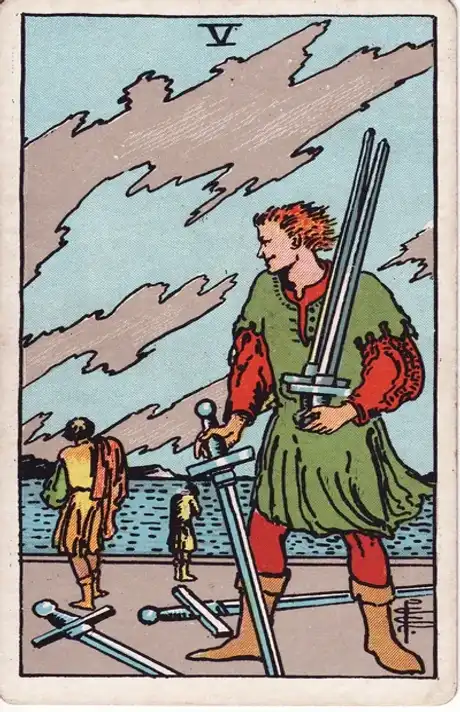
The Five of Swords is the fifth card in the suit of Swords and represents conflict where winning comes at too great a cost, the hollow victory that leaves the winner isolated and the losers humiliated, and the understanding that not every battle is worth fighting. In the traditional Rider-Waite deck, a smirking figure holds three swords while two defeated opponents walk away in dejection, their swords on the ground. The sky is stormy and turbulent, and the victor’s expression suggests satisfaction that borders on cruelty. The scene captures the aftermath of a conflict where one person won through intimidation or unfair means, leaving everyone diminished by the experience.
Connected to Venus in Aquarius and the element of Air, the Five of Swords carries the tension between Venus’s desire for harmony and Aquarius’s intellectual detachment, creating situations where the desire to be right overrides the desire to be kind. When the Five of Swords appears in a reading, it signals conflict, defeat, or the kind of victory that costs more than it gains. It asks you to consider whether winning this particular battle is worth the relationships, integrity, or peace of mind it will cost you.
Upright Meaning
When the Five of Swords appears upright in a tarot reading, it signals a conflict situation where someone wins but everyone loses. This card represents the kind of victory that is hollow because it was achieved through intimidation, manipulation, or the willingness to fight dirtier than the opponent. The Five of Swords upright tells you that the conflict in your life is not producing constructive outcomes and that the cost of winning, or the pain of losing, exceeds what the battle was worth.
The Five of Swords upright often appears when you are involved in or witnessing a conflict characterized by unfairness, cruelty, or the prioritization of ego over genuine resolution. Someone may be bullying others into submission, using intellectual superiority to humiliate, or winning arguments through manipulation rather than merit. Whether you are the victor or the defeated in this scenario, the card suggests that the dynamic is toxic and that continuing to engage serves no one’s highest good.
This card also speaks to the importance of choosing your battles wisely. Not every disagreement requires a fight, not every slight demands retaliation, and not every competition is worth entering. The Five of Swords asks whether the conflict you are engaged in is genuinely important or whether ego, pride, or the simple desire to be right is driving you to fight battles that diminish rather than elevate you.
In practical terms, the Five of Swords encourages you to consider walking away from conflicts that cannot be won honorably, to examine whether your desire to win is costing you more than losing would, and to recognize when a situation has become toxic enough that disengagement is the wisest strategy. Sometimes the bravest thing is not fighting harder but choosing peace over victory.
Reversed Meaning
When the Five of Swords appears reversed, the toxic conflict of the upright card begins to resolve through reconciliation, the decision to move on, or the recognition that the battle was not worth fighting. This reversal often indicates that the time for conflict has passed and that healing, forgiveness, or simply walking away is now the appropriate response.
The Five of Swords reversed often indicates that you are ready to make amends after a conflict, to forgive those who wronged you, or to release the desire for revenge or vindication that has been consuming your energy. The fight is over, and continuing to replay it serves no purpose. Whether you won or lost, the reversal suggests that moving forward requires releasing the conflict rather than holding onto it.
Alternatively, this reversal can indicate that you are finally recognizing the cost of past conflicts and choosing to approach future disagreements differently. The pattern of fighting to win at any cost is being replaced by a more mature approach that values relationships and integrity over being right. This growth, while sometimes painful to achieve, creates the foundation for healthier interactions going forward.
The Five of Swords reversed can also point to lingering resentment or the inability to forgive after a conflict. While the battle may be over, the wounds remain fresh, and the desire for justice or revenge continues to poison your peace. This card encourages releasing these toxic feelings not for the benefit of those who wronged you but for your own freedom and wellbeing.
Love & Relationships
Upright in Love: The Five of Swords upright in a love reading signals toxic conflict within romantic relationships, power struggles that leave both partners wounded, or the kind of arguments where winning matters more than understanding. If you are single, this card may indicate that past relationship conflicts have left you bitter or defensive, or that you are attracted to partners who engage in unhealthy power dynamics. If you are in a relationship, the Five of Swords warns that current conflicts are damaging your bond and that the desire to be right is more destructive than the issues being argued about.
Reversed in Love: The Five of Swords reversed in love indicates the resolution of romantic conflict through forgiveness, compromise, or the decision to stop fighting and start healing. You may be making amends with a partner after a painful argument, releasing resentment from past relationships, or choosing to approach disagreements with more compassion and less combativeness. This reversal suggests that peace is possible if both partners are willing to prioritize the relationship over their egos.
Career & Finances
Upright in Career: The Five of Swords upright in career readings warns of toxic workplace dynamics, professional conflicts where someone wins through unfair means, or the hollow victory of career advancement achieved at the expense of colleagues and integrity. You may be dealing with a workplace bully, experiencing the aftermath of office politics, or discovering that professional success gained through cutthroat tactics leaves you isolated and mistrusted. Financially, the Five of Swords can indicate financial disputes, being cheated in business dealings, or the costs of legal conflicts that drain resources without producing satisfying outcomes.
Reversed in Career: The Five of Swords reversed in career matters suggests the resolution of workplace conflicts, the decision to leave toxic professional environments, or the recognition that certain career battles are not worth fighting. You may be making peace with colleagues after disputes, choosing to walk away from professional situations that compromise your integrity, or finding more constructive approaches to workplace disagreements.
Health & Wellness
The Five of Swords in health readings connects to the physical effects of conflict, stress from interpersonal battles, and the toll that toxic relationships take on the body. Upright, this card suggests that ongoing conflicts in your life are creating significant stress that affects your physical health. Headaches, muscle tension, digestive problems, and immune system suppression can all result from the chronic stress of unresolved conflict. Consider whether the battles you are fighting are worth the health costs they impose.
Reversed, the Five of Swords in health matters suggests that the resolution of conflicts is bringing physical relief. As toxic situations are addressed or released, the stress-related symptoms they created begin to ease. Your body responds positively to peace, and the decision to disengage from harmful conflicts directly supports your physical recovery.
Yes or No
The Five of Swords is a No card. This card’s energy is one of conflict, loss, and hollow victory, suggesting that the path you are asking about leads to outcomes that cost more than they are worth. When the Five of Swords appears in a Yes or No reading, the answer is no, indicating that pursuing this course will likely result in conflict, damaged relationships, or victories that feel empty. Consider whether there is a more peaceful path to what you truly want.
Key Combinations
Five of Swords + Justice: This combination suggests that the conflict you are involved in will be resolved through fair judgment, and that those who fought unfairly will face consequences. Together, these cards indicate that truth and fairness will ultimately prevail, even if the current situation feels unjust.
Five of Swords + Six of Swords: When the Five of Swords appears with the Six of Swords, the best response to toxic conflict is to leave the situation entirely. Together, these cards suggest that walking away from a battle you cannot win honorably is the wisest course of action. Peace lies in departure rather than continued engagement.
Five of Swords + The Star: This combination suggests that hope and healing follow the resolution of conflict. Together, these cards indicate that once you release the toxic dynamics represented by the Five of Swords, genuine peace and renewal become available. The end of conflict opens the door to restoration.
Frequently Asked Questions
What does the Five of Swords mean in a tarot reading? The Five of Swords represents conflict where winning comes at too great a cost, hollow victories, and the understanding that not every battle is worth fighting. It signals toxic dynamics where ego overrides wisdom and where the desire to be right damages relationships and integrity. This card encourages choosing battles wisely and recognizing when disengagement serves you better than continued fighting.
Is the Five of Swords always negative? The Five of Swords is one of the more challenging cards in the tarot, consistently indicating conflict, loss, or pyrrhic victory. However, it serves a valuable purpose by highlighting toxic dynamics that need to be addressed or abandoned. The card’s message, while uncomfortable, empowers you to make better choices about which conflicts deserve your energy and which should be released.
What does the Five of Swords mean in a love reading? In love readings, the Five of Swords represents toxic conflict, power struggles, and arguments where winning matters more than understanding. It warns that current relationship dynamics are damaging and that the desire to be right is more destructive than the issues being fought about. This card encourages choosing love over ego and peace over victory.
What element is the Five of Swords? The Five of Swords belongs to the suit of Swords, associated with the element of Air. Air energy governs thought, communication, and conflict. In the Five of Swords, air manifests as the cutting edge of words used as weapons, the intellectual cruelty of arguments designed to wound, and the mental anguish of conflicts that leave everyone diminished.
Does the Five of Swords mean yes or no? The Five of Swords is a No card in tarot. Its energy warns of conflict, loss, and outcomes that cost more than they are worth. When this card appears in a yes or no reading, it cautions against pursuing the path in question, suggesting that it leads to damaged relationships, hollow victories, or unnecessary suffering. Seek a more peaceful alternative.
Frequently Asked Questions
What does the Five of Swords tarot card mean?
The Five of Swords is a Minor Arcana card from the Suit of Swords. Its core meanings include conflict, defeat, winning at cost, betrayal. Read the upright or reversed position together with the question and surrounding cards.
Is the Five of Swords a yes or no card?
The Five of Swords generally gives a "no" answer in a yes or no tarot reading. The question, card orientation, and surrounding cards can refine that answer.
What does the Five of Swords reversed mean?
The Five of Swords reversed is associated with reconciliation, making amends, moving on, forgiveness. Apply these themes to the specific area of the reading, such as love, career, finances, or personal growth.
What suit does the Five of Swords belong to?
The Five of Swords belongs to the Suit of Swords, which is associated with the element of Air. This suit deals with intellect, conflict, and truth.